
Golf's Original Bad Boy
- Liam Murtle
- Feb 4, 2021
- 8 min read
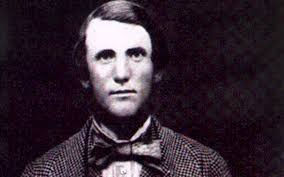
The game of golf was in it's infancy when its first heel entered the picture. William Park Sr., was born on June 30th, 1833 in the vicinity of Mussleburgh, about 10km east of Edinburgh. Park rose to prominence at the same time as Allan Robertson and Old Tom Morris, and we see Park’s history closely intertwined with Old Tom. Park, like Morris, was a great champion winning 4 Open Championships (AKA the British Open) and, also like Morris, was a fine equipment maker. He played with intensity, aggression, and was a thrill to watch. However, his place in the annals of golf history pales in comparison to Morris. Why? Well, I would like to propose that Willie Park Sr., along with being one of the games first great champions, was also the game’s first bad boy.
You're forgiven if you can't quite remember the state of golf when Park was in his prime, as it was some 150 years ago! Let me refresh your memory. Let's go all the way back to the beginning when the game of golf was founded in a Scottish town called St. Andrews. Playing with primitive hand-made equipment on, the first official golf competitions date back to the mid-1800s and took place in the form of challenge matches. In a challenge match, a player from course X was backed by wealthy members of his course to challenge expert player from course Y, who would have been backed by men of similar status and wealth. In any challenge match, competitors played match play against one another (NOT stroke play, which is much more common in competitive play today). Challenge Matches took place over several courses over a few days (very cool!) and featured 36 holes per day. Along with a proportion of the larger prize money at stake, golfers competed for Challenge Belts.
In the early days of the challenge match, there really wasn't such a thing as a "Professional Golfer" as there is today. People who were most skilled at the game had to take on a number of jobs to make ends meet. Park, for example, started out as a caddy and later became a club manufacturer and even owned his own business. Some of his competitors, like Allan Robertson, were teachers of the game along with having a club company of his own, while others worked managing the conditions on the course (AKA Greens Keepers, or "Keeper of the Green" as it was then known). There was no tournament circuit as there is today, where players compete for a big prize week after week. It was through the one-off challenge matches that bonus money was made on top of day job salaries; the challenge matches were also where rivalries were forged in the fires of competition.

FIGURE 1: Poster advertising a challenge match featuring some of the top players of the 19th century. This poster can be viewed on the Fried Egg Pro Shop (Currently out of stock).
In the fledgling stages of competitive golf, Willie Park and Tom Morris were dominant and gobbled up a ton of early Opens as possible (they combined to win the first 7 of 8 Opens). So, why is it that Morris is remembered so much differently than Park? I feel there are a number of key reasons that this is the case.
1) Tom Morris was probably better
While Old Tom and Park won the same number of Open Championships (4 each), Morris, despite being 12 years older than Park, laid a personal smackdown several times. In one particular challenge match, Morris beat Park . A real beauty of the challenge matches was the Match Play component; score was not measured in relation to par, but instead golfers were only measured in relation to each other. As a result, the golfers were the big storyline of any competition (not, say, the difficulty of a particular golf course where the winner shot +7, for example). With Morris beating Park X to Y in the challenge match i've referenced above, the focus is that Morris was, without question, the better player.
2) Park’s geography
There is no question that geography plays a strong role in all of this. Park, as we've established, was from Musselburgh, while Morris was of course from St. Andrews. In the mid to late 1800s, these two towns were distinctly different from a socio-economic standpoint. Musselburgh was a blue-collar coal mining town, while St. Andrews provided a retreat for British Royalty; it had a university and of course was the home of golf.
St. Andrews was not just home to the first golf course, or "Home of Golf." The town of course had the Royal & Ancient Golf Club of St. Andrews. While operating as a golf course, members at the course formed a governing body, known today as the R&A, to organize the official rules of the game. The R&A continue to host and run several tournaments, just as they did when it was initiated. Today, if you go onto the R&A website, you will find that the body has 4 main objectives. One of them reads like this:
To acquire and preserve records and artefacts relating to the history of the game of golf either directly or indirectly.
Could it be that the R&A is helping to put their native son on a pedestal? Old Tom was their hometown lad and they rode for him. While there is a chance that Park's geography plays a slight role in how he is remembered in comparison to Morris, there are more important factors at play.

FIGURE 2: The R&A Clubhouse, St. Andews, Scotland.
3) Family
You might be thinking that Old Tom is remembered in a way Park is not due to the Morris golfing bloodline. The son of Old Tom, Young Tom Morris (naturally), was another great early champion. Tom was one of the most popular figures in the game, winning the Open 4 times in 5 years before dying at just 24 years of age. Could Young Tom be another contributing factor to why the Morris name is synonymous with golf? Absolutely. However, there is no doubt Park was himself of a famous family in golf. His brother Mungo Park would win the Open in 1874 and his son, Willie Park Jr, would win the Open twice! Park Jr was also responsible for several golf course designs, much like Old Tom. Young Tom certainly contributes to the Morris lore, and his death, like it or not, was important in making Old Tom's life so much more interesting and complicated. Park did not have the same personal struggles, and therefore would have been less endearing to the public at large.

FIGURE 3: Young Tom Morris wearing the Challenge Belt he won for winning the Open Championship. Having won the tournament (and belt) three years in a row, he gained the right to keep the belt. With the belt now gone, the R&A needed a new trophy for the winner. This is how the Claret Jug came to be.
Okay so here’s what we know so far: Park and Morris were from rival golf towns and faced off a number of times, both in Opens and Challenge Matches. When they played, they were closely matches, but I think you have to give Morris the edge based on performance in challenge matches. They both had sons who would win Open Championships and were of prominent golfing families that both had a hand in course design.
4) Character
So what else? Let’s discuss Park’s playing style. Park was a big man for his day and would try his best to overpower courses (caugh caugh Bryson caugh) by playing aggressively and taking on challenging shots. This sheds light on a key difference between Park and early counterparts. Park, being big and powerful, albeit impressive, was perhaps not as relatable to the crowds of the time as his counterpart Morris. Everyone, of course, loves the underdog who may not strike it great, but chips and putts well. With Morris and Park, I imagine seeing them on the golf course would have been reminiscent of the classic story of the tortoise and the hare.
In addition to his exciting playing style, Park was a hotshot. It was said that he would bet people anything, anytime. If you were in the crowd watching a challenge match, Park might challenge YOU to a match that he’ll play one handed or maybe play his ball from the face of your watch, and he’d still take your money (or watch). While this behaviour can be categorized as sick, I don't think it would endear him to many fans. It gives off the feel of a hustler willing to do anything to survive, throwing class out the window.
There is a particular example in an Open Championship that displays the brashness with which Park operated. Willie Park and Tom Morris are squaring off against one another in a challenge match held at Park's home course and it's the quintessential home game for Willie. The crowd is going bonkers and treating Morris like the Simpsons treat Grampa Simpson. They're crowding him, kicking his ball into the woods, etc. Not a good look for the Mussleburgh natives. Anyway, things are getting out of hand to such an extent that the Umpire ruling over the match calls for everyone, players included, to go into the bar and relax (extremely questionable logic by the ump, but okay). Everyone somehow complies, with the exception of Willie Park Sr., who proceeds to go back out, plays the final 6 holes, and writes in the newspaper the next day that he should win the match over his rival, demanding the purse. Unfortunately for Park, the umpire rules that it didn't count and he ends up losing to Morris. Can we imagine this happening in, say, a rain delay on tour today? Park, in this scenario, shows he was not afraid to break the rules, nor was he afraid to create his own reality. There are definitely some modern day comparisons. Yikes.
So now we see the full story unfolding. Park Sr., from the blue-collar coal mining town of Mussleburgh, played fast and loose. He was very talented, won a lot of matches, and was a cult hero in his hometown, taking on and beating the hoity-toity St Andrews lot from up the coast. He was truly one of the greats of his era. However, if you weren’t of Mussleburgh stock, you might think his demeanour brash. Compared to Morris, he was a bad boy with a niblick-sized chip on his shoulder. Him and Musselburgh vs. the world was how he saw it, and I'm sure liked it that way.
All this, in addition to being in the shadow of the Morris family, has certainly impacted how his story is told in golf history. I find myself wondering who today’s Morris is, today’s Willie Park Sr. Of course, Patrick Reed comes to mind, especially having made some big news in the golf world this past week. Bryson has also been making news in golf over the past YEAR+. For the record, I think Patrick Reed lacks a conscience, in addition to many other things (e.g. class, style, decency). Bryson should be commended for pushing the boundaries of the game, though is definitely an idiot, despite what everyone seems to think re: his obsession with physics (I think it's more of an obsession with everyone thinking he's obsessed with physics). While the two above modern day players have a slew of character flaws, they are so good for golf because they, like Willie Park Sr. in his own time, are so fun to hate.
Park’s position juxtaposed to Morris helps us see Morris' greatness both as a golfer and, seemingly, as a man. Park's adds so much character and colour to the early days of competitive golf. Golf will no doubt continue to produce more loud, outlandish, psychos and I can't wait to see who's next. Just don't let it be another cheater.
Inspiration & Notes
I got inspiration for this post in a few ways. I have been researching the best golfers of all time and was really struck by Willie Park Sr and wanted to share his story a bit. I also listened to a podcast about a year ago featuring Stephen Proctor on the FriedEgg podcast. I heard several of the stories featured in this post on the pod and I recommend giving it a listen if you are interested: https://thefriedegg.com/fried-egg-podcast/episode-181-stephen-proctor-on-challenge-matches/


Comments